The evening
Nothing goes to waste in the kitchen or in publishing
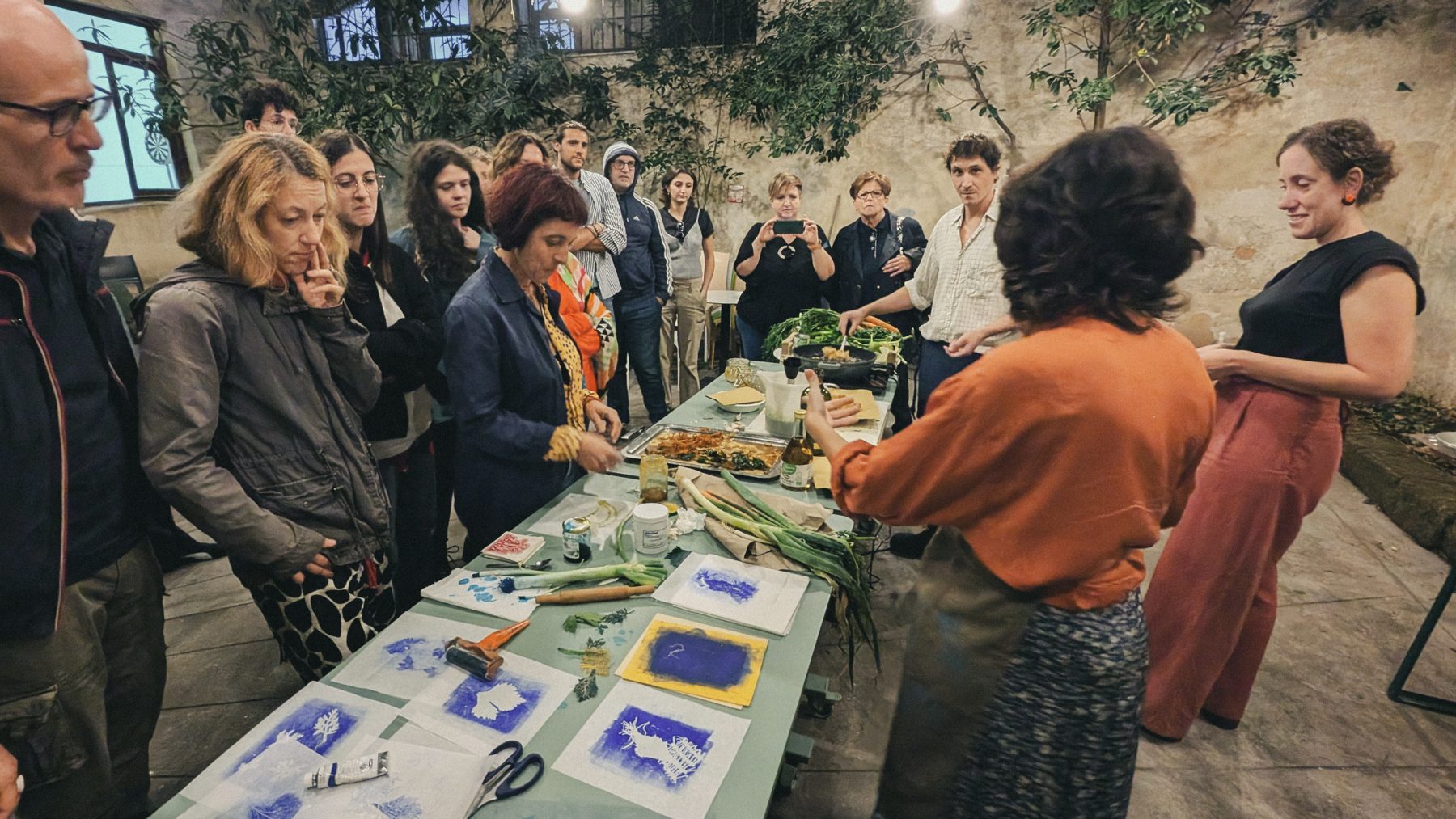
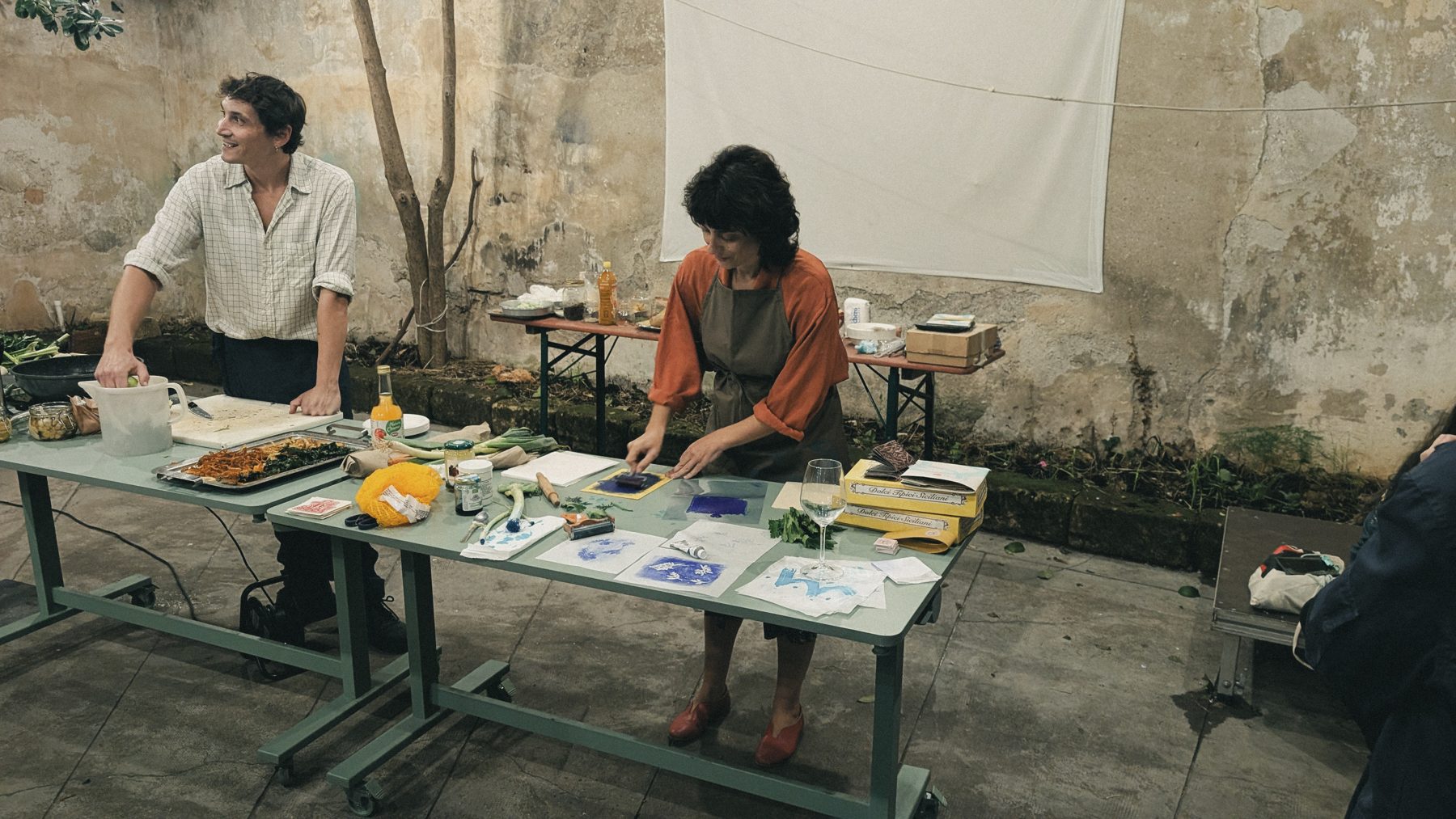
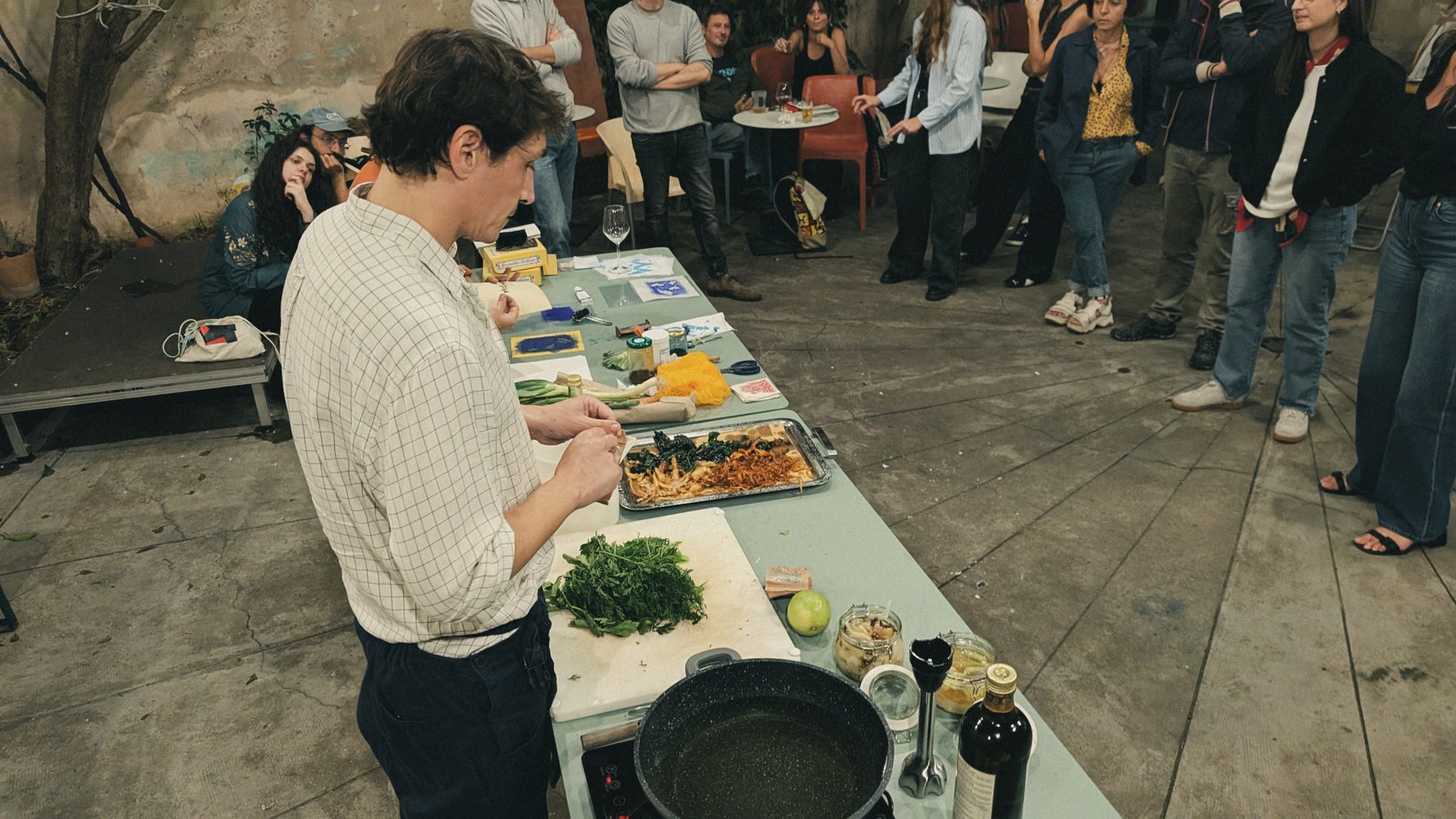
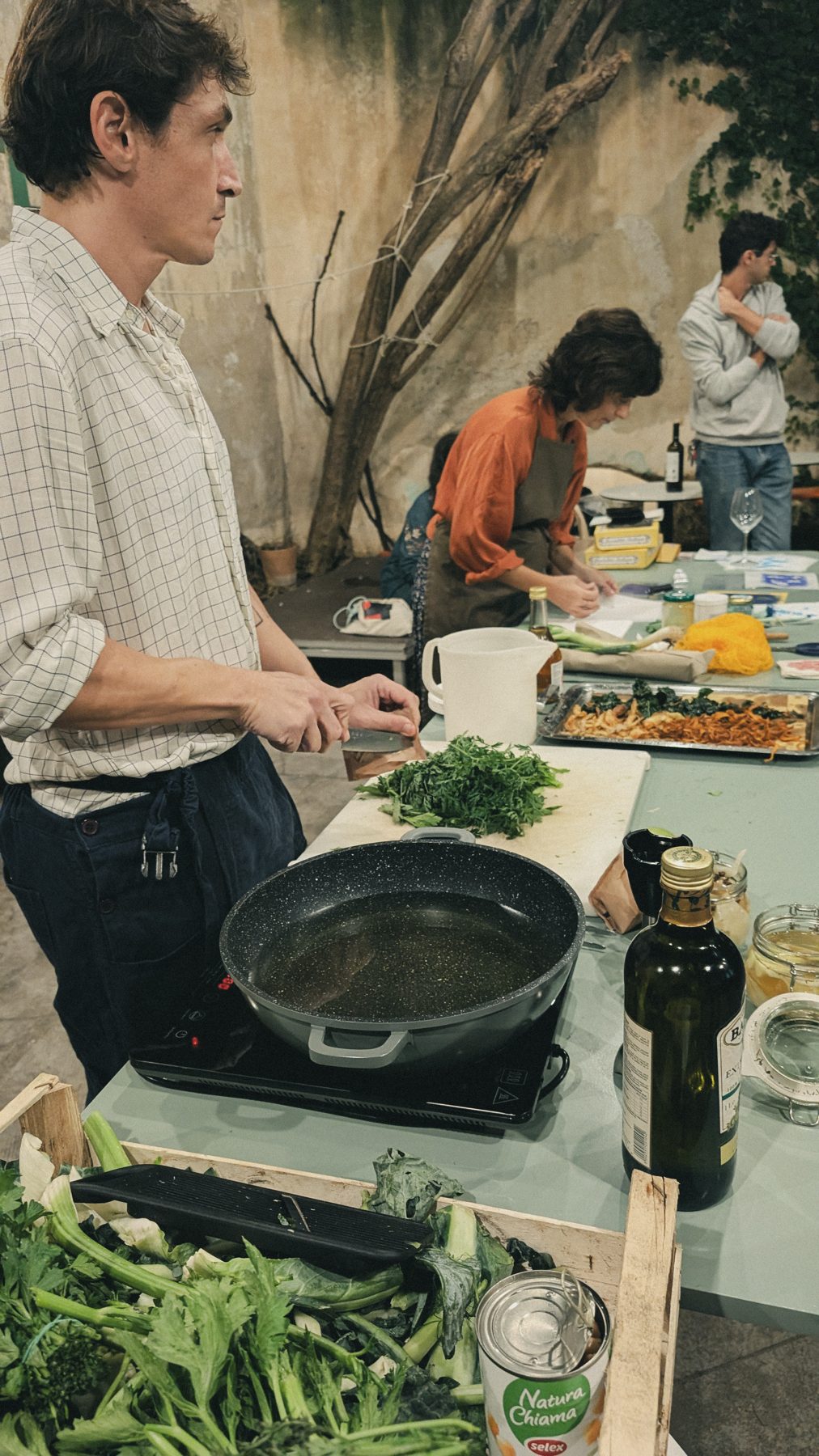
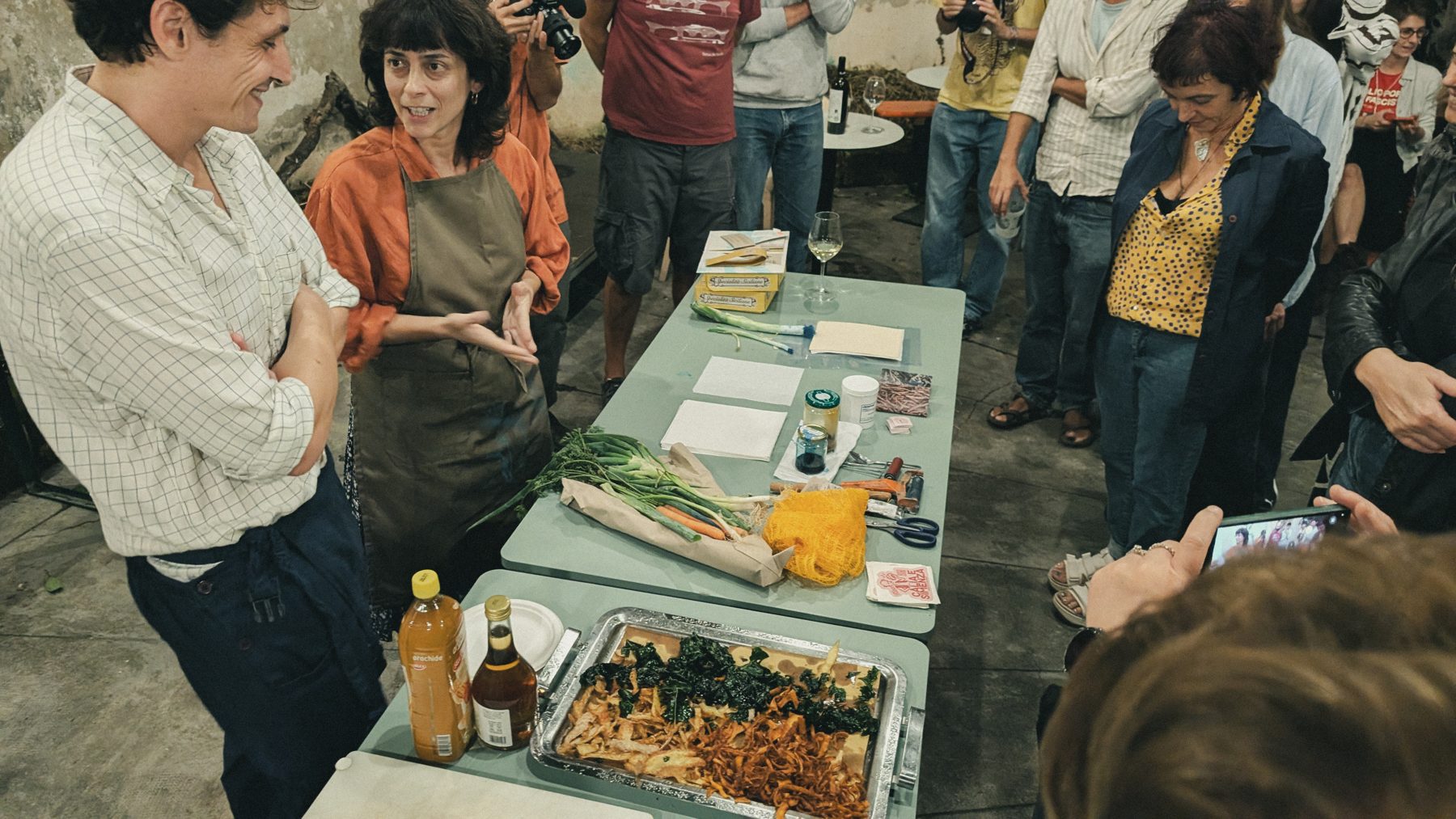
For the second Food for Thought event we joined In-Sorgenti Festival in the EPYC courtyard. At the stove and the worktable was a special brigade: chef Antonio Campo and Carmela Dacchille of Edizioni Precarie.
On one side, the kitchen; on the other, a printing table. In the middle, the same question: what happens to the things that usually end up in the bin? Peels, stalks, cores, tops and outer leaves became small bites, while we talked about waste, markets and how the city is changing.
All the recipes are vegan and make about 25 small tasting portions each: enough for a long table, and easy to scale down at home.
- When
- Sunday 11 October 2026, 8 pm
- Where
- In-Sorgenti Festival, EPYC
- In the kitchen
- Antonio Campo
- At the printing table
- Carmela Dacchille, Edizioni Precarie
Recipe 02.1 · Peels
Carrot and potato peel crisps with aquafaba mayonnaise
The peels we usually throw away become crunchy crisps. And aquafaba, the cooking water from chickpeas, takes the place of egg in a vegan mayonnaise.
Wash and dry the peels
Wash the vegetables well before peeling, then dry the peels thoroughly: the less water they hold, the crunchier they will be.
Fry a few peels at a time
Fry a few peels at a time in oil at 170–175 °C until crisp. Drain and salt only at the end.
Make the mayonnaise
Blend the aquafaba, lemon juice, mustard and salt. Keep blending while you pour in the oil in a thin stream, until creamy.
Chef’s tip
Be patient and it won’t split
If you use a stick blender, submerge it completely and blend on low speed, keeping it at the bottom of the container. Be patient: this way the mayonnaise won’t split.
Recipe 02.2 · Stalks and cores
Quick sweet-and-sour pickles
Broccoli stalks, cauliflower cores and fennel stalks only look tough. Sliced thinly and left in a sweet-and-sour brine, they become a crunchy, tangy side dish.
Trim only what you must
Remove only the parts that are really fibrous or damaged, then slice the stalks and cores very thinly.
Make the brine
Bring the water, vinegar, sugar and salt to the boil. If you like, add a few peppercorns and a bay leaf.
Pour and let it rest
Pour the hot brine over the vegetables and leave to rest for at least 30 minutes. For a bolder flavour, make it a few hours ahead.
Chef’s tip
The longer it rests, the better it tastes
But if you can’t wait to try it, here’s a good way to tell when it’s ready: wait until it has cooled down!
Recipe 02.3 · Tops, leaves and herb stalks
Pesto for crostini, pasta or couscous
Carrot tops, celery leaves and parsley stalks blended with almonds and lemon. A fragrant green pesto to spread on bread or toss through pasta.
Wash and dry the greens
Wash the tops, leaves and stalks and dry them very well.
Pulse-blend
Pulse the tops, leaves, stalks and almonds. Add lemon juice, salt and oil until you reach the texture you like.
Taste and balance
Taste and adjust the salt, lemon and oil.
Chef’s tip
If the tops are bitter
If the carrot tops taste very bitter, add a little more almond, lemon or parsley.
Serve on crostini
Spread a little pesto on each crostino. Any leftovers are perfect with pasta or couscous.
Recipe 02.4 · Outer leaves
Spiced chickpea-flour fritters
Outer cauliflower and broccoli leaves, carrot peels and fennel fronds go into a spiced chickpea batter. Fry them by the spoonful and eat them hot.
Chop the vegetables finely
Wash, dry and finely chop the leaves, peels and fennel fronds.
Make the batter
Mix the chickpea flour, spices, salt and water into a thick but soft batter.
Add the vegetables
Fold the vegetables into the batter.
Fry and serve hot
Fry small spoonfuls in oil at 170–175 °C until golden. Drain on kitchen paper and serve hot.
Zero-waste tip · Aromatic trimmings
The freezer bag for stock
Keep a clean food bag in the freezer and add trimmings as you go: leek greens, carrot ends, celery, fennel, herb stalks.
When the bag is full, use what’s inside as the base for a vegetable stock. Leave out damaged parts and go easy on brassicas and very bitter bits.
It’s the same stock behind the citrus risotto in our first recipe.
In the bag
- Leek greens
- Carrot ends
- Celery
- Fennel
- Herb stalks
Better not
- Damaged parts
- Too many brassicas
- Very bitter bits
The printing table · Edizioni Precarie
Printing with what’s left over
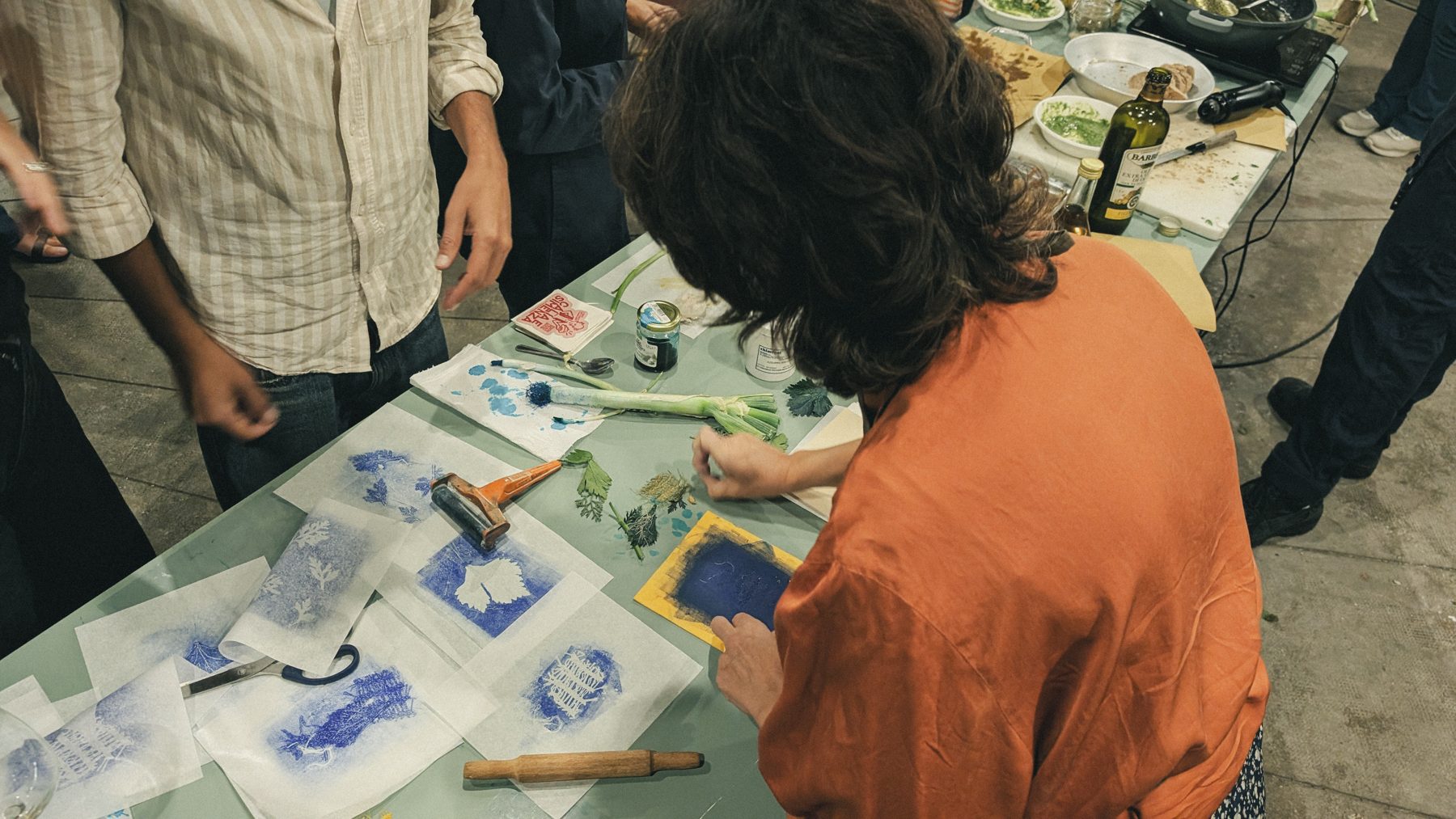
While Antonio cooked, Carmela Dacchille of Edizioni Precarie set up a printing table next to the stove: blue ink, rollers, paper and, as printing blocks, the same scraps that had just crossed the chopping board.
Leaves, stalks and tops were inked and pressed onto paper, leaving their shapes behind in blue. Anyone waiting for a taste could stop at the table and give it a try.
A way of showing that waste isn’t only a kitchen matter: in publishing too, offcuts, spare sheets and leftovers can become the raw material for something new.
Meet Carmela Dacchille among our guests →
Nothing goes to waste in the kitchen or in publishing.