Distributed
Calia e Simenza
We’re setting the table
Preparing the page with images, stories and connections.
Community food observatory
A COMMUNITY-CREATED MAP OF FOOD IN THE CITY
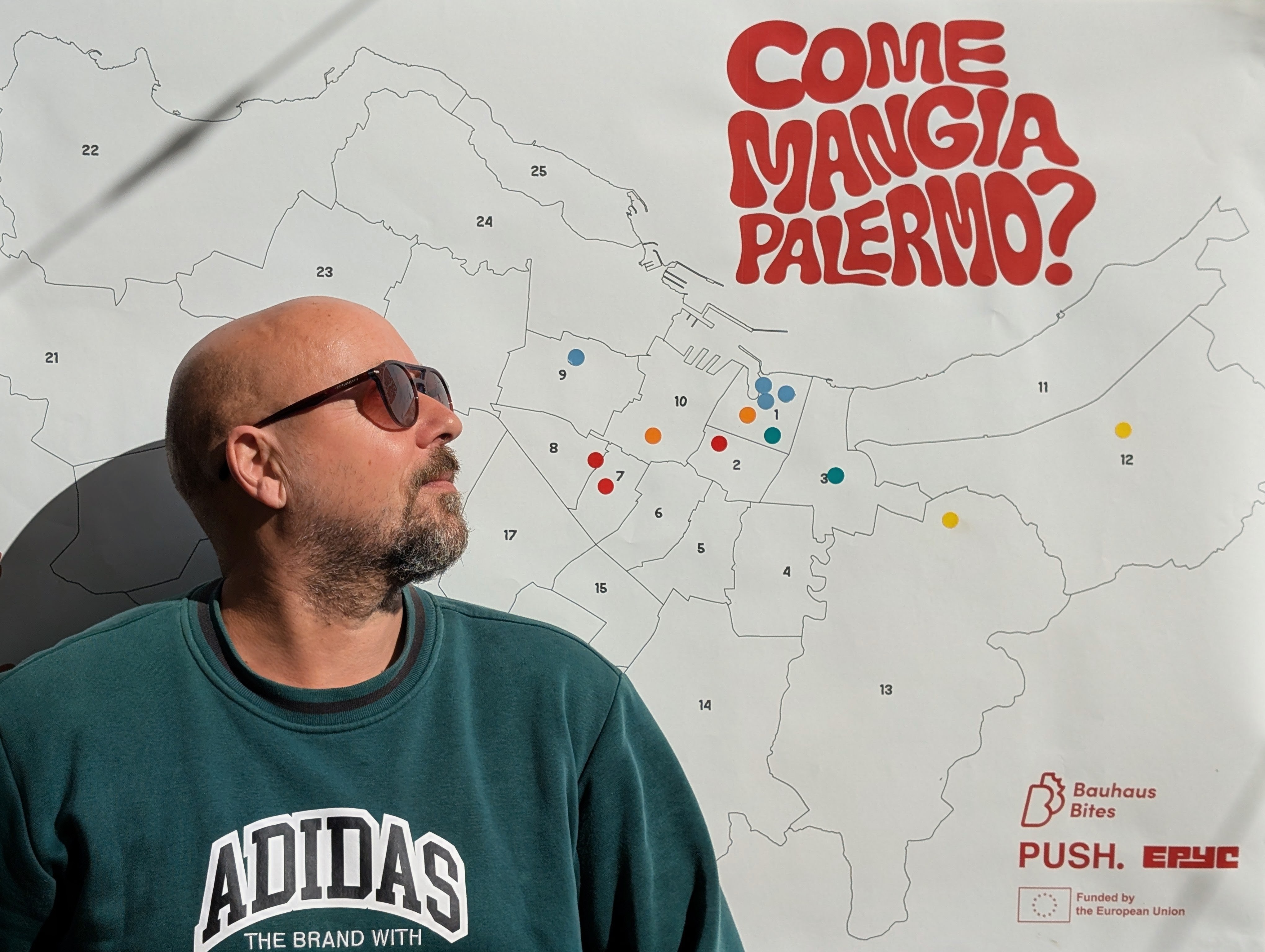

How Does Palermo Eat? is a community food observatory exploring Palermo’s foodscape through collaborative mapping.
How many bakeries are there in your neighbourhood? Is there a market within a ten-minute walk? Where is the nearest producer? Who sells unpackaged products or food from short supply chains? Where can you eat well on a budget?
We all have pins on our own maps. Bringing them together means creating something that does not yet exist: a shared, documented picture of how food moves through the city.
Information about urban food is often scattered, hard to find or missing from maps. Taking part helps us understand where food places are located across neighbourhoods, how accessible, affordable and inclusive they are, and where opportunities cluster or barriers emerge.
Contributing means turning everyday knowledge into a shared resource for research and public discussion.

Through the How Does Palermo Eat? app, you can map different types of food-related places:
For each place, collect whatever information you can observe. Even “I don’t know” is useful: it helps distinguish what is visible from what is not.
Start with a part of the city you know well: the neighbourhood where you live or work, or somewhere you often pass through. You do not need to cover everything. Even a small area can provide useful insights when observed carefully.
Look for a food-related place and mark it on the map. It might be somewhere food is bought, eaten, distributed or shared, such as a market, bakery, restaurant, association or public space. Choose the category that best describes each location.
Collect as much information as you can about each place. You can observe from outside, look online, read a menu, go inside or ask directly. You do not need to know everything: partial information is useful too, and you can indicate when something is unavailable.
You can map several places in one session, gradually building a broader picture of the area you are exploring. Even a few carefully chosen points help make the map richer and more useful.
At the end of your session, you can review the places you recorded, check the information and email yourself a summary. This lets you keep track of your mapping and return to it later.
The map helps us understand how food provision works in the city and how it responds to the everyday lives of the people who use it.
The data will make overlooked food places and practices more visible, while helping us understand how urban space enables or limits access, choice and consumption.
Documenting what exists helps recognise its value and supports more informed, affordable and nutritious food choices.
Our aim is to build an open, shared knowledge base about food in Palermo, supporting research and a more informed public discussion of the urban food system.
The map will also provide a starting point for a shared food manifesto for Palermo, shaped by residents’ experiences and the evidence gathered over time.
How Does Palermo Eat? is part of a European research project. Community-led data collection produces socially relevant knowledge rooted in real needs, helping inform decisions and food policies. It also broadens the scope of research by bringing in local and everyday knowledge that might otherwise be left out. The findings will be available to everyone through an open-access map, publications and public information materials.